Custom ecommerce built around the supply chain
Coral Computers replaced an aging WordPress store with a Python-based ecommerce platform built around their workflow. Fourteen live distributor integrations keep the catalog current and pricing automatic. AI handles the content. The same team now publishes up to five times more products.

A platform that couldn't keep up
Coral Computers is a Serbian IT retailer selling computers, printers, peripherals, and accessories. Their store ran on WordPress. The admin was slow, the frontend performance lagged, and the system had no real path to the kind of scale they needed.
Adding new products meant manual data entry. Keeping prices in sync with distributors required constant attention. The team spent significant time on work the platform should have been doing for them.
Built to handle the actual workload
We replaced the WordPress setup with a Python-based ecommerce platform shaped around how the Coral team works: fast frontend, improved search, and an admin built for their specific catalog and sales workflow. The new system was designed from the start to handle a catalog that would keep growing.
14 distributors, one live catalog
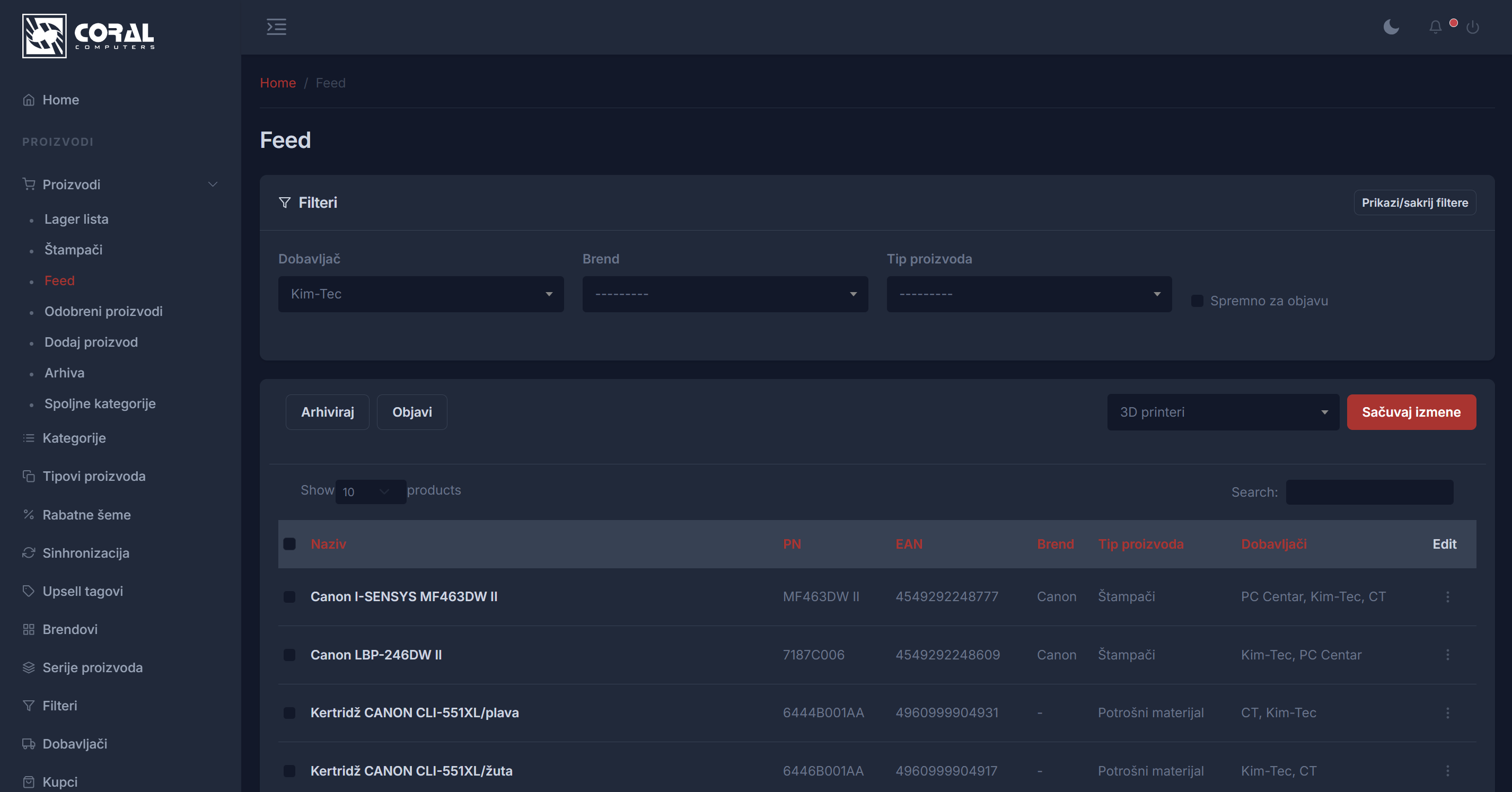
The most consequential part of the platform is what happens behind the product listings. We connected Coral to their distributors via API. The work started with three integrations and has grown to fourteen.
Every integration feeds the same catalog. Stock levels stay current in real time, including items not physically in Coral's warehouse but available through a distributor. When a supplier changes their price, the system recalculates margins automatically and updates the storefront. The team no longer manages this by hand.
From 3 to 14 distributors
Each integration brings its own data format, API structure, and update frequency. The platform normalizes everything into a single catalog, keeps availability accurate, and handles pricing logic centrally.
Content that writes itself
Distributor data feeds contain structured product information, but not always in a form that works for a retail storefront. Product names vary by supplier, descriptions are often absent or technical, and specifications need to be mapped to filterable attributes for search to work properly.
We integrated AI into the product pipeline to handle this. Names are cleaned and standardized. Descriptions are generated from the raw supplier data. Specifications are parsed and mapped to filters, which matters most for complex categories like laptops where customers search by processor, RAM, and display size.
Names, descriptions, specifications
The AI layer runs as part of the product import workflow. When new items come in from a distributor, they go through the pipeline before they hit the catalog. The result is consistent, searchable product data without the manual work that used to go into it.
Two years in, still building
The platform went from replacing a WordPress site to becoming the operational core of how Coral runs their catalog. Each integration added, and each AI capability layered in, has reduced the manual overhead on the team while expanding what the business can offer.
That is what the work looks like when the platform is right for the job.
Running an ecommerce business on a platform that's holding you back? Let's talk.
Start a conversation →